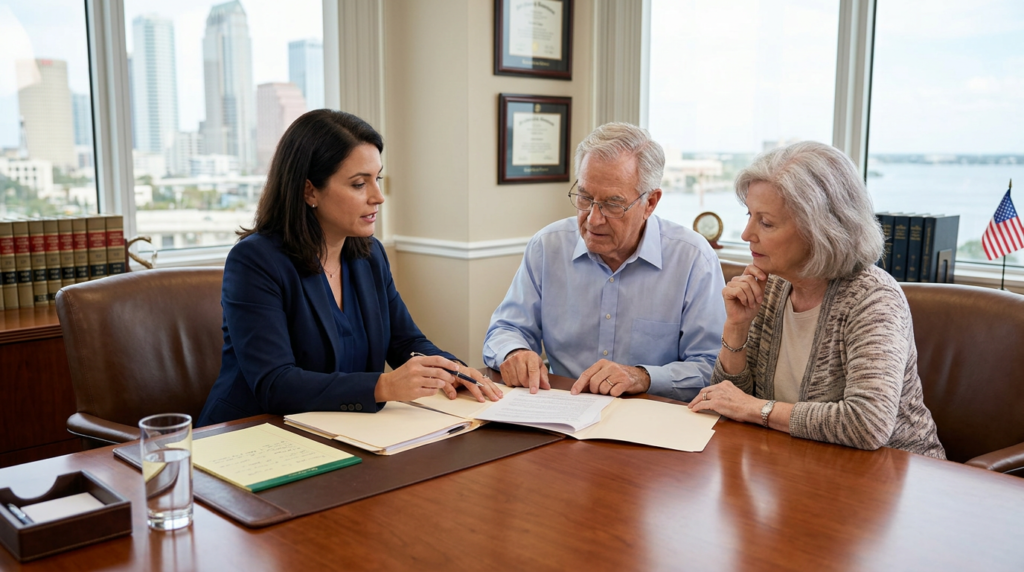
Quick answer: You likely need an estate planning attorney if you own a home, have minor children, want to reduce probate delays, or need clear instructions for medical decisions. Florida’s homestead rules, beneficiary designations, and power-of-attorney requirements can override what you thought your will would do. A local attorney helps you choose the right documents, coordinate titles and beneficiaries, and keep everything properly executed under Florida law.
What an Estate Planning Attorney Actually Does
An estate plan is more than “a will.” A local estate planning attorney in Tampa Florida helps you pick the right mix of documents, then makes sure they work together so your assets and decision-making authority go where you intend.
For many families, that means drafting a will, revocable living trust (if it fits), durable power of attorney, health care surrogate designation, living will, and HIPAA authorization. The attorney should also help you line up beneficiary designations (life insurance, retirement accounts) and property titles so you don’t accidentally bypass your plan or trigger extra court steps.
Good planning also includes practical “what-if” conversations: who would raise your kids, who would manage money for them, how to handle a family business, and how to protect a loved one who struggles with spending, addiction, or disability.
Florida-Specific Issues That Commonly Trip People Up
Florida has quirks that can make DIY estate planning risky. General rule: Florida homestead protections can restrict how you leave your primary residence, especially if you have a spouse or minor child; the details can change based on your family situation and how the property is titled. Attorneys often look closely at the homestead devise limits in Fla. Stat. § 732.4015 and related homestead provisions before relying on “the will says so.”
Powers of attorney are another frequent problem area. General rule: Florida requires specific signing formalities for a power of attorney under Fla. Stat. § 709.2105, and institutions may refuse to honor a document that doesn’t meet those requirements. For example, a bank might reject a POA if it wasn’t executed with the right witnesses/notarization or if the authority you need (like making certain transfers) isn’t clearly granted; whether a refusal is proper depends on the document and the request.
Beneficiary designations can also control who receives an account, even if your will names someone else. General rule: many assets pass by contract (like a payable-on-death designation) rather than by the will, and the beneficiary form usually wins; the outcome depends on the account’s terms and any later changes you made. Coordinating these “outside the will” assets helps avoid situations like naming a minor directly, which can lead to a court-supervised guardianship of the child’s property to manage the funds until adulthood.
General Guidance: Will-Only vs Trust/Advanced Planning (Triage Checklist)
This is general guidance, not a substitute for legal advice, but it can help you triage what to ask for.
A will-only plan is often sufficient when: you have straightforward assets mostly with beneficiary designations (like retirement accounts), you’re comfortable with Florida probate for what remains, you don’t own real estate in other states, and you mainly need to name a personal representative and guardians for minor children.
A trust or more advanced planning is commonly considered when: you want to plan for incapacity and smoother management of assets, you have a blended family (second marriage, his/hers/ours kids), you own out-of-state property (which can create multiple probates), you have a beneficiary who shouldn’t receive funds outright, or you want more privacy and ongoing control than a will typically provides.
What to Bring to Your First Meeting
You don’t need perfect paperwork to start, but a little prep saves time. Bring a list of your assets (home, bank accounts, retirement plans, life insurance, business interests), how each is titled, and any beneficiary designations you can access. Also bring existing legal documents, including old wills, trusts, and powers of attorney.
Come ready to name decision-makers: who would handle finances if you couldn’t, who would make medical decisions, and who should inherit. If you have children, think about guardians and who you trust to manage money for them. If you’re worried about a beneficiary’s spending habits or eligibility for benefits, mention it early so the plan can be structured appropriately.
For help getting a clear, Florida-appropriate plan in place, you can contact The Gonzalez Law Firm.