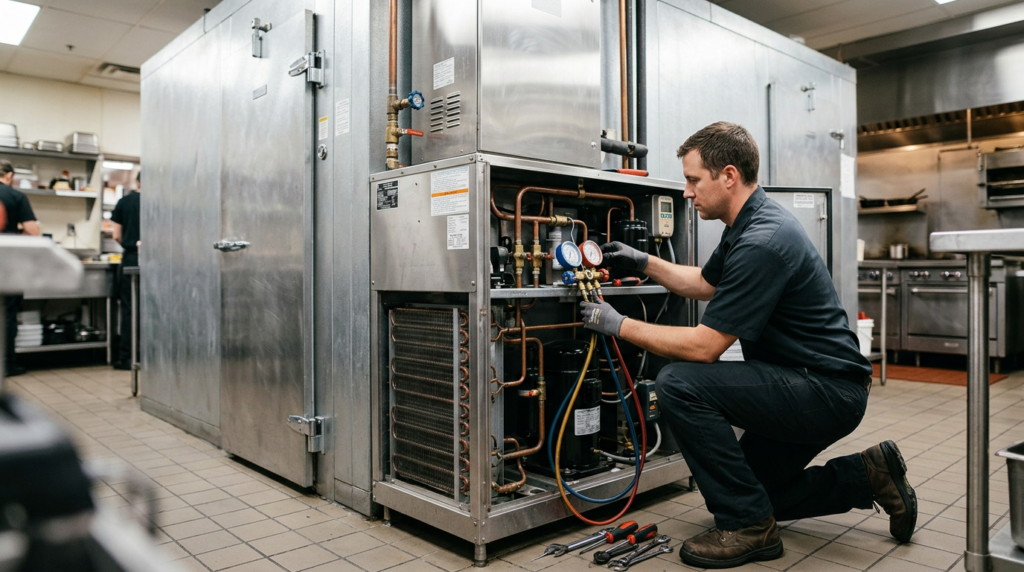
Quick answer: Call a commercial HVAC/refrigeration contractor that services your equipment type (walk-ins, reach-ins, prep tables, ice machines) and can handle both repair and preventive maintenance. For urgent issues, choose a provider that can respond quickly, bring common parts, and diagnose electrical, refrigerant, airflow, and control problems on-site. Ask for clear documentation of findings, recommended fixes, and temperature verification after the repair.
What “Commercial Refrigeration Service” Usually Includes
Commercial refrigeration service is a mix of troubleshooting, repair, and upkeep aimed at keeping food-safe temperatures and preventing breakdowns. A typical visit may include checking box temperature vs. setpoint, inspecting door gaskets and hinges, confirming fans are running, cleaning or clearing the condenser area, and verifying the defrost system is working as designed.
For deeper problems, the tech may test electrical components (contactors, capacitors, relays), sensors, and control boards; look for refrigerant leaks; measure superheat/subcooling; and confirm the evaporator isn’t icing up from airflow restrictions or a failing defrost heater/timer. If you’re searching specifically for Sun Prairie commercial refrigeration services, it helps to have your equipment model/serial numbers and a description of symptoms ready so the visit is efficient.
Many contractors also offer preventive maintenance: coil cleaning, drain line clearing, tightening electrical connections, checking refrigerant circuit performance, and documenting temperatures. Maintenance won’t eliminate every failure, but it can reduce nuisance trips, high head pressure issues, and premature compressor wear.
What to Have Ready When You Call
Having a few details ready can shorten diagnosis time and reduce back-and-forth once a tech arrives. If you can safely access the data plate and controller display, gather what you can.
- Equipment type and location (walk-in cooler/freezer, reach-in, prep table, ice machine)
- Model and serial number(s)
- Current box temperature and setpoint
- Any alarm codes or controller messages
- What changed recently (restock, door left open, power outage, cleaning)
- Last service date and what was done (if known)
- Photos of frost patterns, ice buildup, oil residue, or a clogged condenser area
Signs You Need Service Before You Lose Product
Temperature alarms and warm product are obvious, but smaller clues often show up first. If the unit runs constantly, short-cycles, or can’t pull down after restocking, suspect dirty condenser coils, poor airflow, low refrigerant charge from a leak, or a failing compressor/start component.
Watch for heavy frost on the evaporator cover, water on the floor near the walk-in, or a drain pan that keeps overflowing. Those can point to a defrost problem, a blocked drain, or doors not sealing. Unusual noises matter too: squealing can be a fan motor bearing, clicking can be a relay/contactor, and loud buzzing at startup can indicate a struggling compressor or weak capacitor.
If you see oil residue near fittings or along copper lines, treat it as a potential leak indicator and get it checked. Catching leaks early can prevent extended downtime and repeated “top-offs” that don’t solve the root cause.
How to Choose a Provider and What to Expect After the Visit
A good fit is a contractor that can service your equipment category and refrigerant type and can support both repair and preventive maintenance. Use a quick, vendor-neutral checklist so you can compare options objectively.
- Proper licensing for your area and proof of insurance on request
- EPA Section 608 certification for technicians handling refrigerants
- Clear written documentation: symptoms, test results, root cause, and recommended next steps
- Temperature verification after the repair (and guidance on what to monitor over the next 24 hours)
- Parts sourcing approach: common-stock items vs. special-order lead times, and how they handle backorders
- Communication plan for after-hours issues and who authorizes additional work if needed
After the work is done, expect a summary of what failed, what was corrected, and any maintenance items that would reduce repeat problems (like condenser cleaning frequency, gasket replacement, or defrost adjustments). For a neutral next step in Sun Prairie, contact a qualified commercial refrigeration contractor to schedule diagnosis or preventive maintenance; Nextech is one local option to consider.