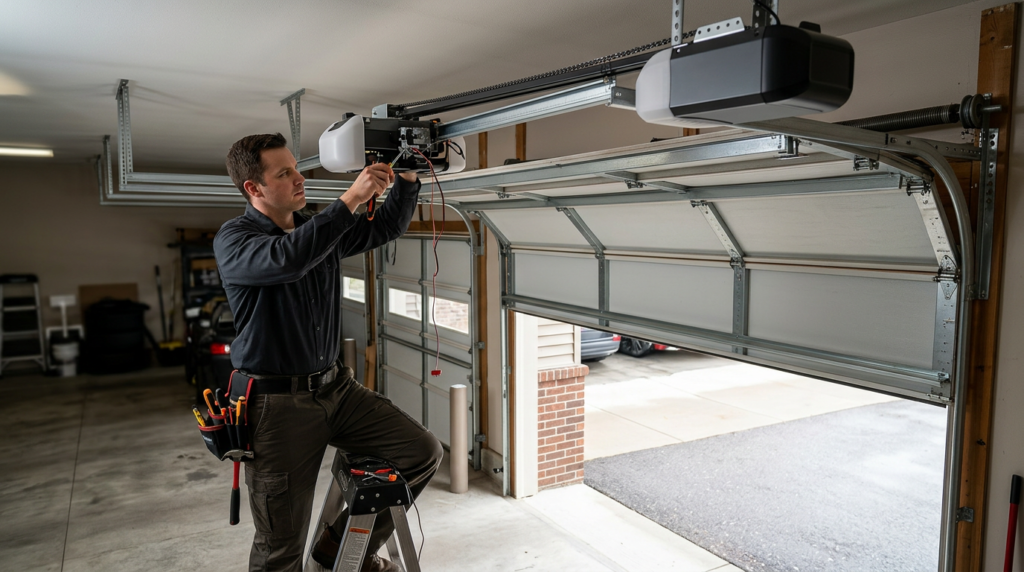
Quick answer: You can get a LiftMaster garage door opener installed in St. Paul through (1) local garage door companies that sell and install LiftMaster, (2) LiftMaster-authorized dealers if one is available in your area, or (3) big-box retailers that subcontract installation. The best choice depends on scheduling, service support, and who handles follow-up repairs. A qualified installer will verify door balance, install safety sensors, set travel/force limits, and program remotes and app features.
What to expect from a local LiftMaster installer
For “where,” you generally have three realistic options in St. Paul: (1) local garage door companies that install LiftMaster openers, (2) authorized LiftMaster dealers (if applicable in your area), and (3) big-box retailers that sell the opener and subcontract the install. Local door companies often provide the most direct service if you need adjustments later; authorized dealers may offer tighter product support; big-box installs can be convenient for purchasing, but follow-up service can depend on the subcontractor’s schedule and policies.
If you’re comparing options for liftmaster openers st paul mn, focus on who will actually show up, who you call if it acts up, and what’s included in writing. You can verify an installer is qualified by confirming they carry liability insurance, checking recent local reviews, and asking for proof of manufacturer authorization if they claim to be an “authorized” dealer.
Installation usually includes mounting the motor unit, rail, and header bracket; installing or reusing the wall control; wiring and aligning photo-eye safety sensors; and setting travel limits and force settings. Many homeowners also want setup for remotes, a wireless keypad, and Wi‑Fi/app control. A careful installer will test the auto-reverse safety system and confirm the door seals and closes without binding or bouncing.
Choosing the right LiftMaster opener for your garage
LiftMaster offers several drive types, and the “best” one depends on your garage layout and priorities. Belt-drive models are a common pick for attached garages because they tend to run quieter with less vibration. Chain-drive units are often a solid value and can be a good fit for detached garages where noise matters less. Wall-mount (jackshaft) openers free up ceiling space and can be great for high ceilings, car lifts, or storage, but they require a compatible torsion-spring setup and enough side room by the torsion tube.
Look at features that match how you use the door: battery backup for outages, bright LED lighting for darker garages, a secure wireless protocol for remotes, and smartphone control if you want alerts when the door opens or closes. If your door is larger or heavier (some insulated steel doors are), an installer may recommend a higher-duty model or confirm that the door hardware is in top shape so the opener isn’t overloaded.
What to ask an installer before you book
Get clear answers up front so you can compare quotes fairly. Here’s a practical checklist of questions that usually reveals how thorough the installer will be:
• Which exact opener model is included, and is it new-in-box with all manufacturer parts?
• Does the price include new photo-eye safety sensors and new wiring if needed?
• Will you check door balance and basic hardware condition (rollers/hinges/track) before installing?
• Will you set and test travel limits and force settings, and demonstrate the auto-reverse test?
• What warranty applies to the opener, and what warranty applies to labor? How do service calls work?
• Is removal and disposal of the old opener and packaging included?
• Will you program all remotes/keypads and help connect Wi‑Fi/app features if the model supports it?
• Are there any permit or inspection requirements for this type of electrical work in my city, and who handles them if needed?
Repairs, safety, and what not to DIY
New openers get blamed for problems caused by the door itself. If the door is loud, jerky, or crooked, replacing the opener alone may not fix it. Common red flags include a door that slams shut, cables that look loose or frayed, rollers that wobble, or a door that sticks at the same spot every time. Those issues can throw off travel limits and trigger safety reversals.
For safety, don’t DIY torsion springs, extension springs, bottom brackets, or lift cables—those parts are under high tension and can cause serious injury if handled incorrectly. Homeowners can safely do basic checks like cleaning the photo-eye lenses, confirming both sensors are aimed at each other, removing cobwebs from the track area, and testing the auto-reverse by placing a small piece of wood on the floor under the door.
After installation, keep the system reliable with simple habits: test the auto-reverse monthly, keep photo-eyes clean, and listen for new squeaks or grinding. If you want help selecting a LiftMaster model, installing it safely, or troubleshooting an existing unit in St. Paul, AA Garage Door LLC is a place to get help.